How to Work Out Intervals in Grade 5 Music Theory
The two-step method, compound intervals, and the traps · 五級樂理音程
Interval questions appear in every ABRSM Grade 5 Theory paper, and they are very learnable: one method covers every single question. Students lose marks not because intervals are hard, but because they guess from the keyboard instead of following the two steps below.
Step 1 — Count the letter names (the number)
Count the letter names from the bottom note to the top note, including both. C up to G: C-D-E-F-G — five letters, so it's a 5th. That's the whole step. Accidentals are completely irrelevant here: C to G♯ is still some kind of 5th, because C-D-E-F-G is still five letters.
Step 2 — Judge the quality
Now imagine the major scale of the bottom note and ask: is the top note in it?
- If the top note is in the bottom note's major scale, the interval is major (2nds, 3rds, 6ths, 7ths) or perfect (4ths, 5ths, octaves).
- One semitone smaller than major → minor. One smaller than minor or perfect → diminished.
- One semitone larger than major or perfect → augmented.
| Family | Sizes, smallest → largest |
|---|---|
| 2nd, 3rd, 6th, 7th | diminished → minor → major → augmented |
| 4th, 5th, octave (unison) | diminished → perfect → augmented |
Note what's missing: there is no "major 5th" and no "perfect 3rd". If you ever write one, step 2 has gone wrong.
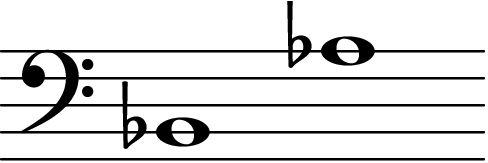
Compound intervals
An interval bigger than an octave is compound. Work it out as if the notes were in the same octave, then either add "compound" or add 7 to the number: a compound perfect 5th is the same thing as a perfect 12th. The quality never changes — only the number.
The trap Grade 5 loves: augmented 2nd vs minor 3rd
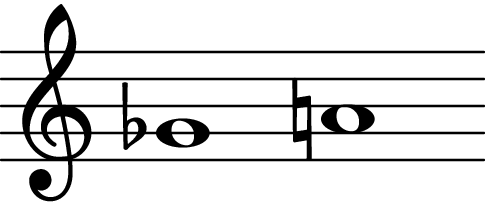
This pair is the classic distractor: the same piano keys, two different answers depending on spelling. The rule that saves you every time: letter names decide the number before your ears get a vote. G♭–A♮ (two letters) is an augmented 2nd; G♭–B double-flat (three letters) is a minor 3rd — identical sound, different names.
Quick self-test
- Minor 6th above C♯ — what note?
- G♯ up to F: what interval?
- Is a compound perfect 4th the same as an 11th?
(Answers: A · diminished 7th · yes.) If any of those took more than ~15 seconds, that's exactly the drill worth doing before the exam.
Practise with real exam-style questions
Tonica's Grade 5 mock papers include interval questions in every paper — notation-based, with instant marking and an explanation for every answer, in English and 中文. Paper 1 is completely free, no signup, and you can drill intervals on their own in topic practice.
Try interval questions free →免費音程練習 · 即時評分 · 中英雙語