ABRSM Grade 5 Music Theory: What to Expect
Format, topics, pass marks and how to prepare · 五級樂理考試指南
Grade 5 Music Theory is the most-taken music theory exam in the world, largely because ABRSM requires a pass in it (or an equivalent) before you can take Grade 6–8 practical exams. For most students it's a gateway, not a destination — which means preparing efficiently matters.
The exam at a glance
| Item | Detail |
|---|---|
| Total marks | 75 |
| Pass | 50 / 75 (66%) |
| Merit | 60 / 75 (80%) |
| Distinction | 65 / 75 (87%) |
| Format | Online, on-demand (booked when you're ready) or at exam centres in some regions; all questions are selected-response — no free composition at Grade 5 |
| Language | English |
The seven topic areas
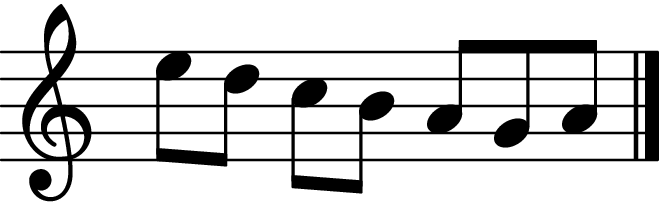
- Rhythm — time signatures (simple and compound), note values, grouping, rests (see our rhythm guide)
- Pitch — notes in four clefs (treble, bass, alto, tenor), octave transposition, enharmonics (see our clefs guide)
- Keys & Scales — all major and minor keys up to six sharps/flats, scale degrees, harmonic and melodic minor (see our keys & scales guide)
- Intervals — number and quality (major, minor, perfect, augmented, diminished), compound intervals (see our intervals guide)
- Chords — tonic, subdominant and dominant triads, chord positions (a/b/c), cadences (see our chords and cadences guides)
- Terms, Signs & Instruments — Italian, French and German terms, performance directions, orchestral instruments and voices (see our full terms glossary)
- Music in Context — applying all of the above to a real score extract
Where students actually lose marks
- French and German terms — most students know the Italian but freeze on retenu or bewegt. They're a small set; learn them as vocabulary.
- Interval quality — counting the number is easy; identifying augmented vs minor trips people up, especially with accidentals.
- Compound time — 9/8 has three beats, not nine. Grouping questions test whether you really understand this.
- The alto and tenor clefs — pure familiarity; a little regular reading practice fixes it.
- Harmonic minor's raised 7th — the single most-tested scale detail.
How to prepare (a teacher's honest advice)
- Do full mock papers under exam conditions. Knowing the material and finishing 75 questions accurately are different skills.
- Review every wrong answer with the explanation — the mistake pattern matters more than the score.
- Drill your weakest topic separately. Ten focused interval questions beat another full paper if intervals are your gap.
- Learn terms like vocabulary — a few a day, not a cram. The glossary covers the full list.
- If English isn't your first language, make sure you understand the concepts in your own language first — then attach the English labels. (This is exactly why our practice app is fully bilingual, English + 中文.)
📅 ABRSM's online theory exams can be booked year-round, with results typically within days. Check the official ABRSM website for current booking windows and fees in your country.
Practise free
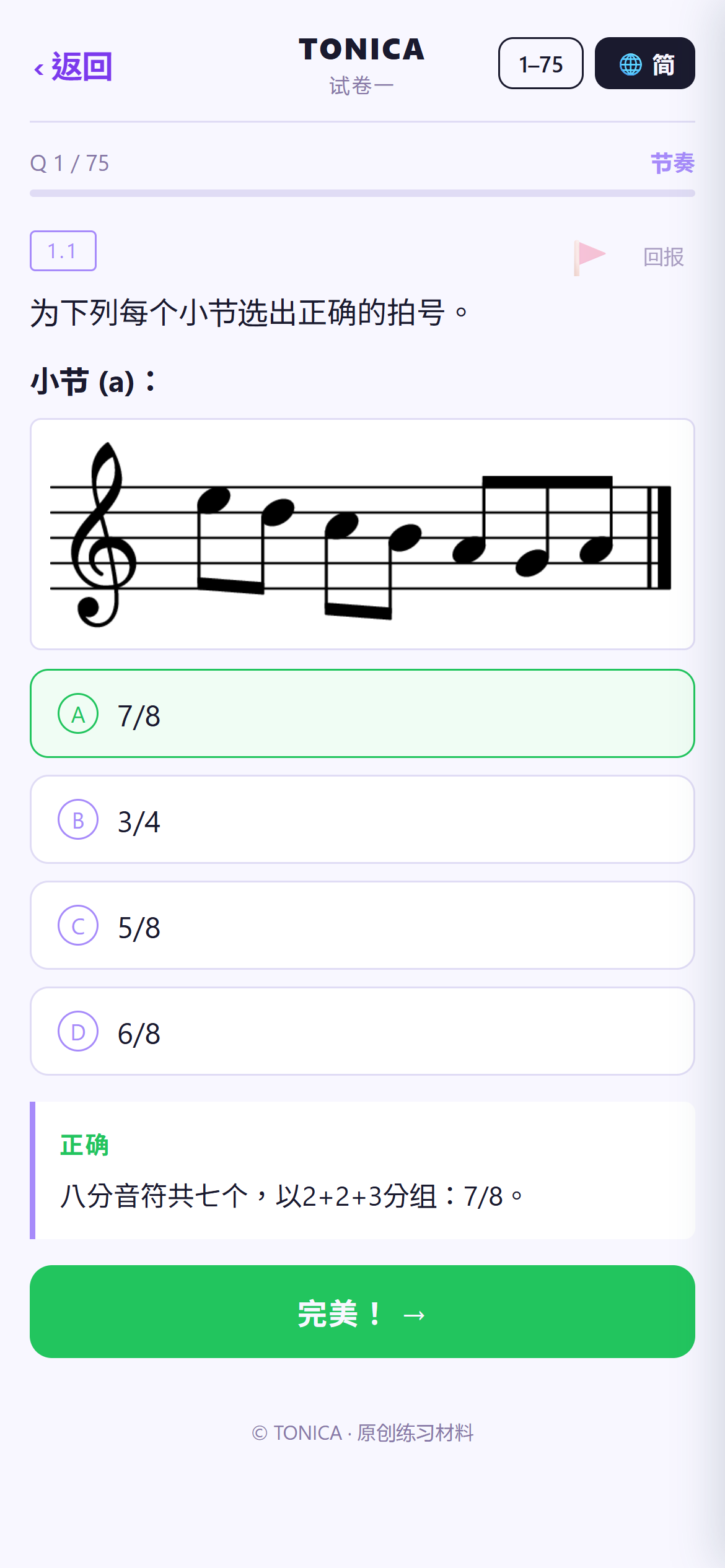
Tonica gives you full 75-question Grade 5 mock papers in the real exam format, with instant marking and an explanation for every answer — switchable between English, Traditional and Simplified Chinese. Paper 1 is completely free, no signup.
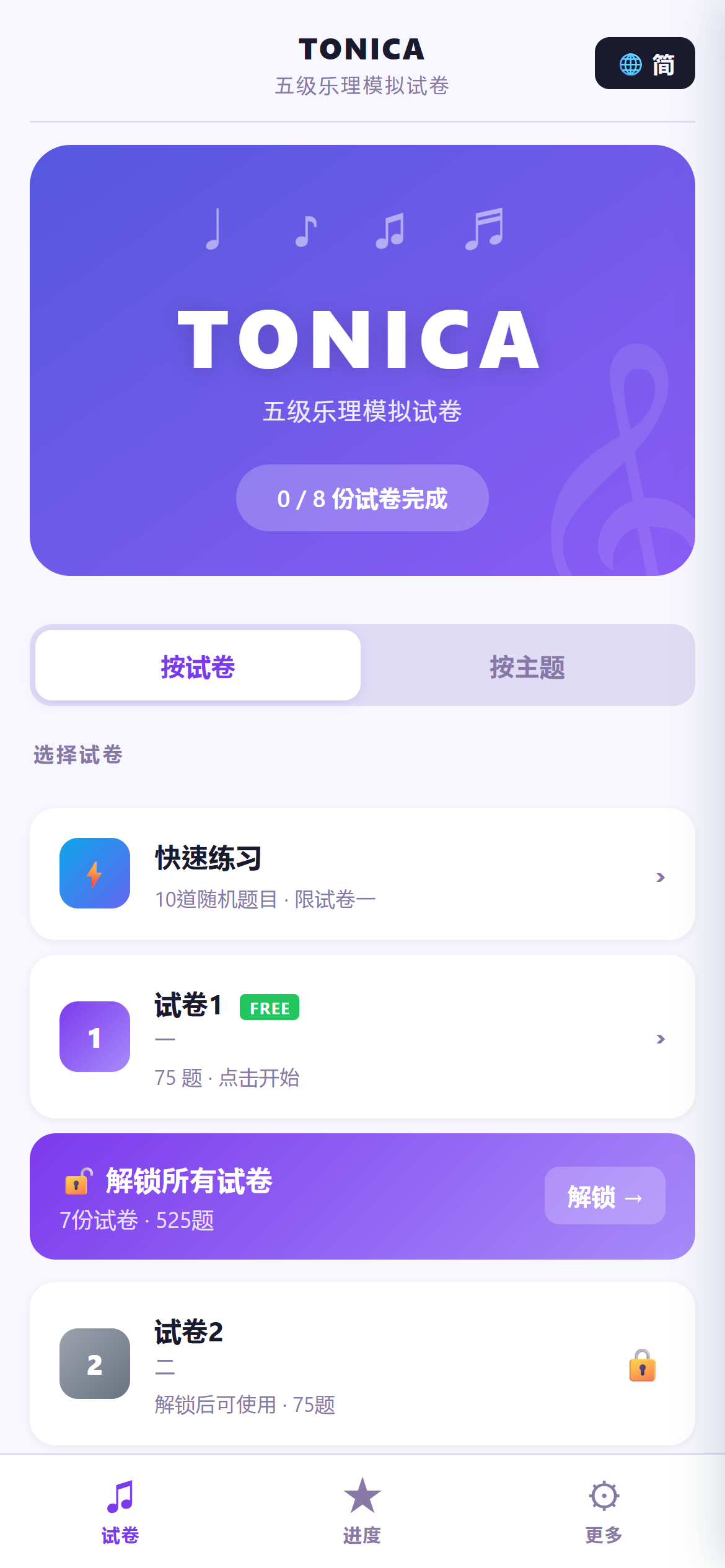
免費模擬試卷 · 即時評分 · 中英雙語