Cadences in Grade 5 Music Theory: Perfect, Imperfect & Plagal
The last-two-chords method · 五級樂理終止式
A cadence is just how a musical phrase ends — and in ABRSM Grade 5 Theory you only need to tell apart three of them. Every cadence question comes down to the same move: look at the last two chords, and nothing else.
The three cadences at Grade 5
| Cadence | Last two chords | How it feels |
|---|---|---|
| Perfect | V → I | Finished. A full stop. |
| Plagal | IV → I | Also finished — the "Amen" ending in hymns. |
| Imperfect | anything → V | Unfinished. A comma — the music must carry on. |
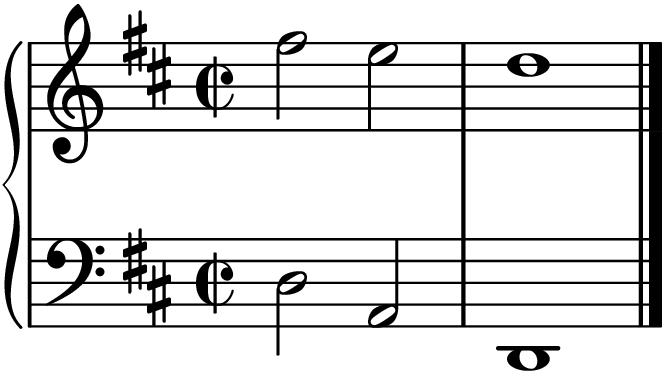
A checklist that never fails
- Find the key from the key signature (and check the end of the melody agrees).
- Name the last chord. Ends on V → it's imperfect, done. Ends on I → go to step 3.
- Name the second-to-last chord. V → perfect. IV → plagal.
Step 2 is where most marks are saved: both perfect and plagal end on chord I, so the second-to-last chord is the real question. Check the bass note first — it's usually the root.
How the exam actually asks it
Grade 5 papers don't ask "define a plagal cadence". They give you a short melody or a two-stave extract with the final chords shown (or labelled with boxes), and ask you to name the cadence — exactly like the figure above. That's why practising from notation beats memorising definitions: the skill being tested is reading, not vocabulary.
Common mistakes
- Answering from the last chord alone. Ending on I doesn't decide perfect vs plagal — the chord before does.
- Forgetting the key. Chord V in D major is A major; in G major it's D major. Same notes, different Roman numeral — always establish the key first.
- Overthinking inversions. At Grade 5, cadence questions are about which chords, not which position they're in.
Practise with real exam-style questions
Tonica's Grade 5 mock papers include cadence questions in the real ABRSM format — notation first, instant marking, an explanation for every answer, in English and 中文. Paper 1 is completely free, no signup.
Try cadence questions free →免費終止式練習 · 即時評分 · 中英雙語